BRIDGING BORDERS, BULDING TRADE:
THE RISE OF FARROW AND NORTH AMERICAN GLOBAL TRADE
Introduction: Bridging Borders, Building Trade
“Bridging Borders, Building Trade: The Expansion of North American Trade and the Rise of the Farrow Organization” tells two intertwined stories – the sweeping transformation of North American trade and infrastructure, and the parallel rise of a family business that grew alongside it. We invite you to journey through this rich tapestry of history – from regional ingenuity to global commerce – a story that continues to inspire.
The story begins in 1911, when Russell Alexander Farrow, son of longtime Canadian Customs Commissioner Robinson Russell Farrow, launched a customs brokerage business in one of the continent’s busiest trade corridors, the Detroit River crossing between Windsor, Ontario, and Detroit, Michigan. With nothing more than a desk and typewriter aboard a ferry boat, Russell brought customs processing directly to the point of trade, pioneering a model built on efficiency, responsiveness, and meeting commerce at its source, fundamentally transforming the future of customs operations.
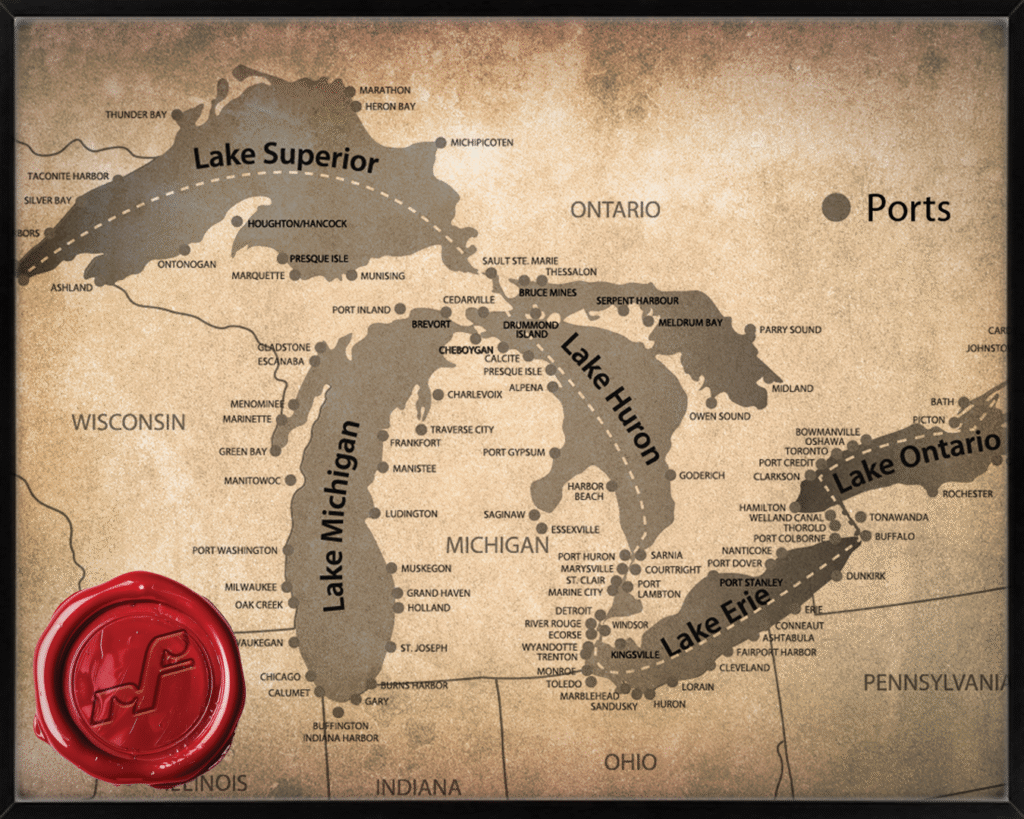
The Great Lakes have long served as a vital artery for trade and development across Canada and the United States, shaping economies, connecting communities, and fostering innovation. This series delves into the historical evolution of North American trade routes and infrastructure, and the Farrow organization’s expansion in step within that growing trade infrastructure landscape.
As international bridges replaced ferries, canals deepened, and highways and ports transformed supply chains, the Farrow company evolved to match – from typewriters to digital platforms – playing a pivotal role in streamlining trade between Canada and the United States, in turn strengthening the economic fabric of both nations. By examining key infrastructures, trade routes, and defining moments, this series follows both journeys and captures the collaborative spirit of progress, perseverance, innovation, and the remarkable interplay between local innovation and global trade.
Mayor Russell A. Farrow
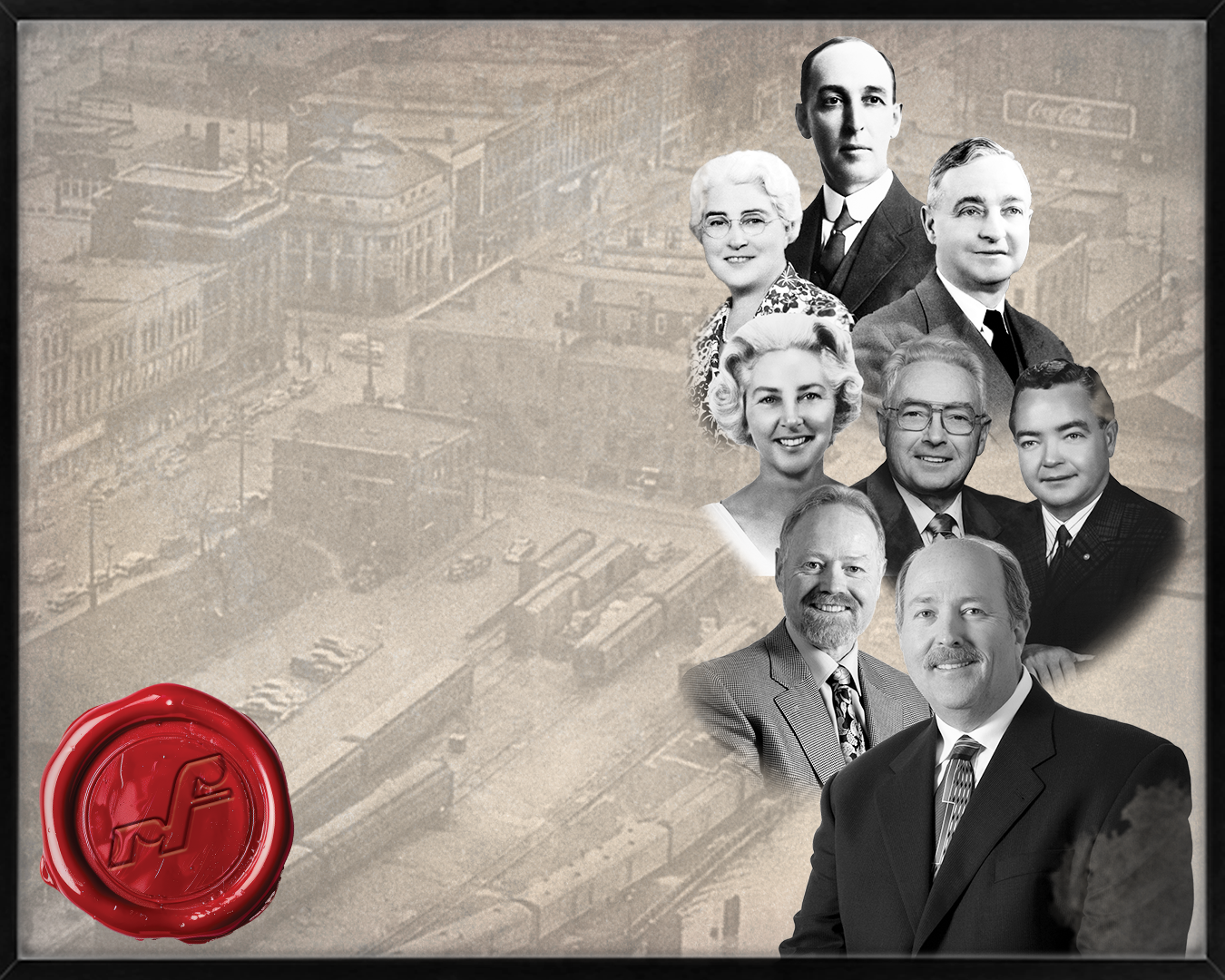
Russell A. Farrow, originally from Ottawa, Ontario, moved to Windsor, Ontario, in 1910. Initially working as a Dominion Customs Appraiser for the Department of National Revenue, Russell gained significant insights into both customs brokerage and duty drawback claims services.
A year later, Russell started his own customs brokerage firm catering to the thriving commercial ferry traffic between Detroit and Windsor. This new organization, Russell A. Farrow, had to temporarily halt operations when Russell was enlisted in the Canadian army to serve on the Western Front during World War I. Upon his return in 1918, Russell revived the business, and the Farrow organization prospered in the years of economic prosperity and industrial expansion that followed the war.
A pioneer in integrated logistics services, Russell was among the first brokers in Canada to own delivery vehicles, providing customers with an integrated logistics service that combined both brokerage and transportation solutions.
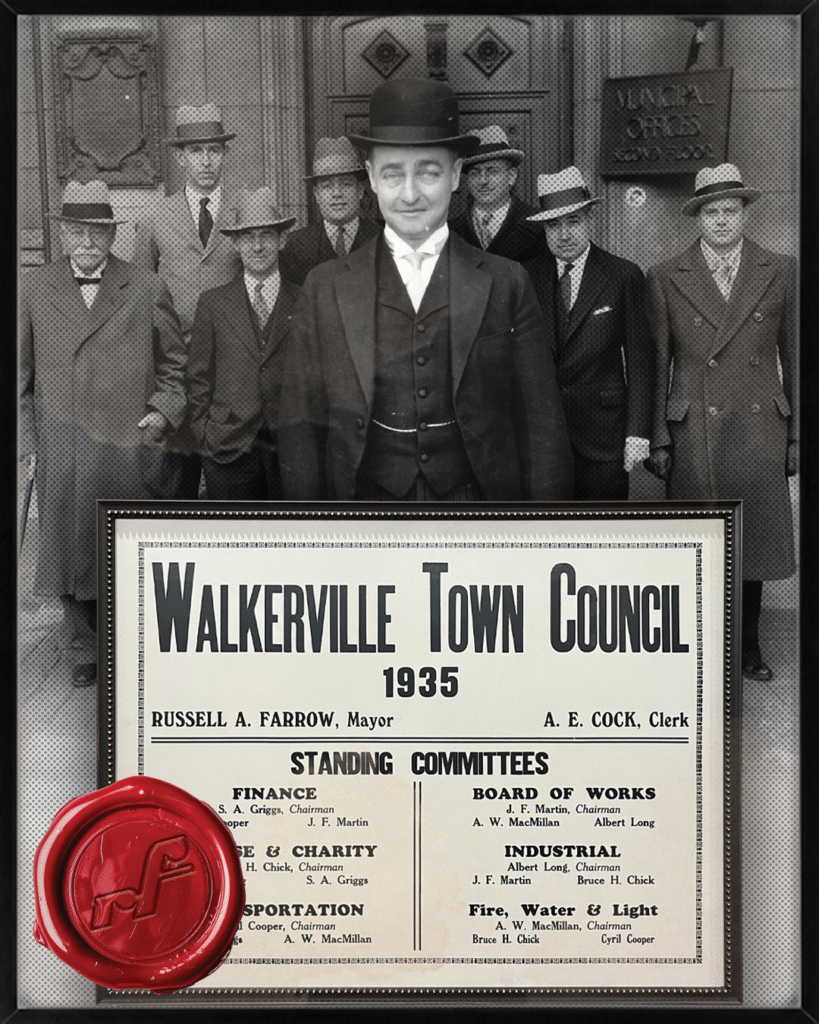
In the 1930s, Russell diversified his interests by becoming politically active, serving as both a local organizer for the Federal Liberal Party and the Mayor of Walkerville, Ontario in 1934.
His tenure as Mayor was marked by Russell’s commitment to public service, as is evidenced in a historical photograph of the 1934 Walkerville Council with Farrow in his mayoral role.
Russell’s entrepreneurial spirit and commitment to both business and to public service continue to inspire us today. His innovative approach to customs brokerage modernized trade and supply chain operations, contributing significantly to the growth of many industries and to the prosperity of trade in both Canada and the United States.
The Great Lakes
Short Sea Shipping
Short Sea Shipping routes (maritime transport of goods over short distances) are key for port connectivity, trade support, and economic growth.
These shipping routes connect North America, including services from Caribbean hubs to East and Gulf Coast ports, Seattle-Anchorage, Tampa-New Orleans-Houston, and the northeastern seaboard linking cities like Boston, Massachusetts; New York, New York; Baltimore, Maryland; and Norfolk, Virginia. Montreal, Quebec; and Halifax, Nova Scotia, also connect to St. John’s, Newfoundland and Labrador, promoting provincial maritime trade by linking Canadian ports.
With regional trade expansion, the Farrow organization prospered as client trade activity increased with the St. Lawrence Seaway and the Great Lakes routes. Businesses today continue to transport goods via these routes, supporting supply chain efficiencies. As an added bonus, Short Sea Shipping provides an environmentally friendly transport alternative by curbing congestion and emissions.
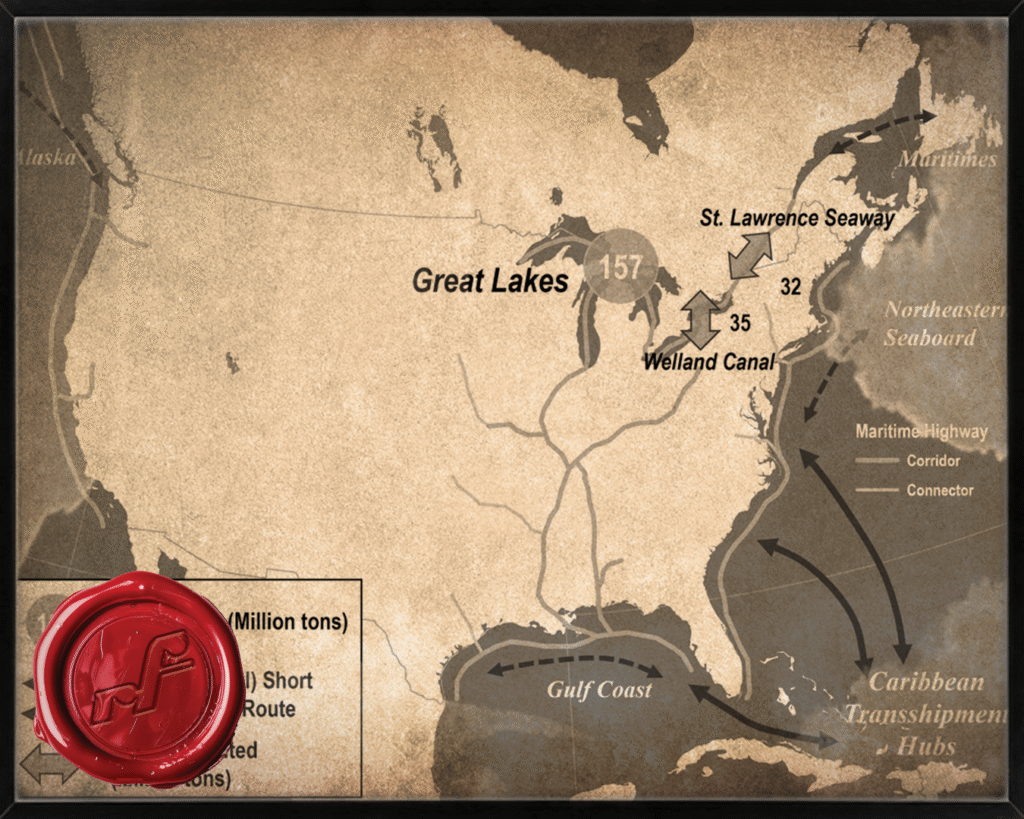
St. Lawrence Seaway
Construction on the Seaway’s infrastructure began in the 1950’s, expediting large cargo movement. The St. Lawrence Seaway became an important waterway for North American trade, as well as serving as an integral component of the Short Sea shipping routes.
Jointly managed by the United States and Canada, today this Seaway remains a vital trade gateway supporting billions of tonnes of cargo and regional economic activity. The Seaway’s continuous improvements over the years contribute to both countries’ regional trade growth.
Since its early days in use, Farrow customs brokerage worked with many companies who leveraged the Seaway’s efficiency for high-volume shipments. One example is a large salt mine operation in Windsor, Ontario, which depends on ships to transport its product. At one time, Farrow managed their brokerage and saw business growth as a result of this client, and others, increasing trade activity on the Seaway.
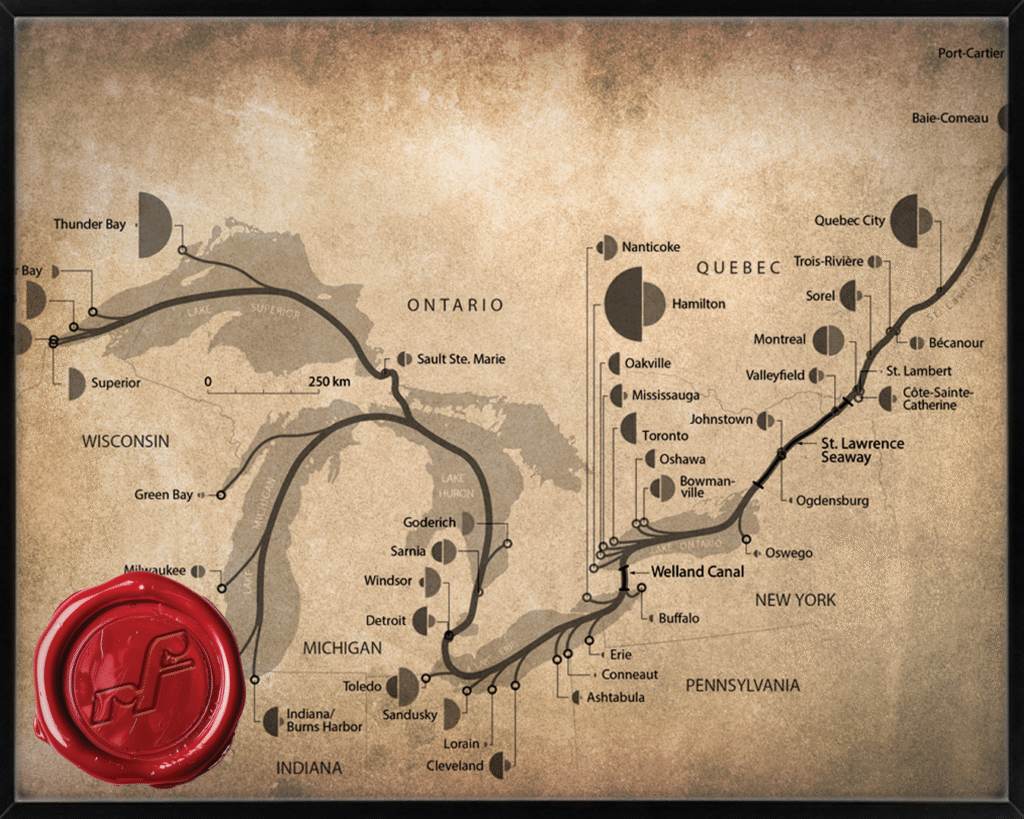
The Welland Canal
Completed on November 30, 1829, the creation of the Welland Canal improved transportation and trade in the Great Lakes region by allowing for circumvention of Niagara Falls.
By 1932, as traffic grew, the canal expanded to a 27-mile waterway with eight locks, linking the Great Lakes to the St. Lawrence River. This canal, supporting regional and global goods movement, bolstered the region’s industrial and economic growth. Since its early days through to today, the Farrow organization continues to support client trade activity in this area of the Great Lakes region.
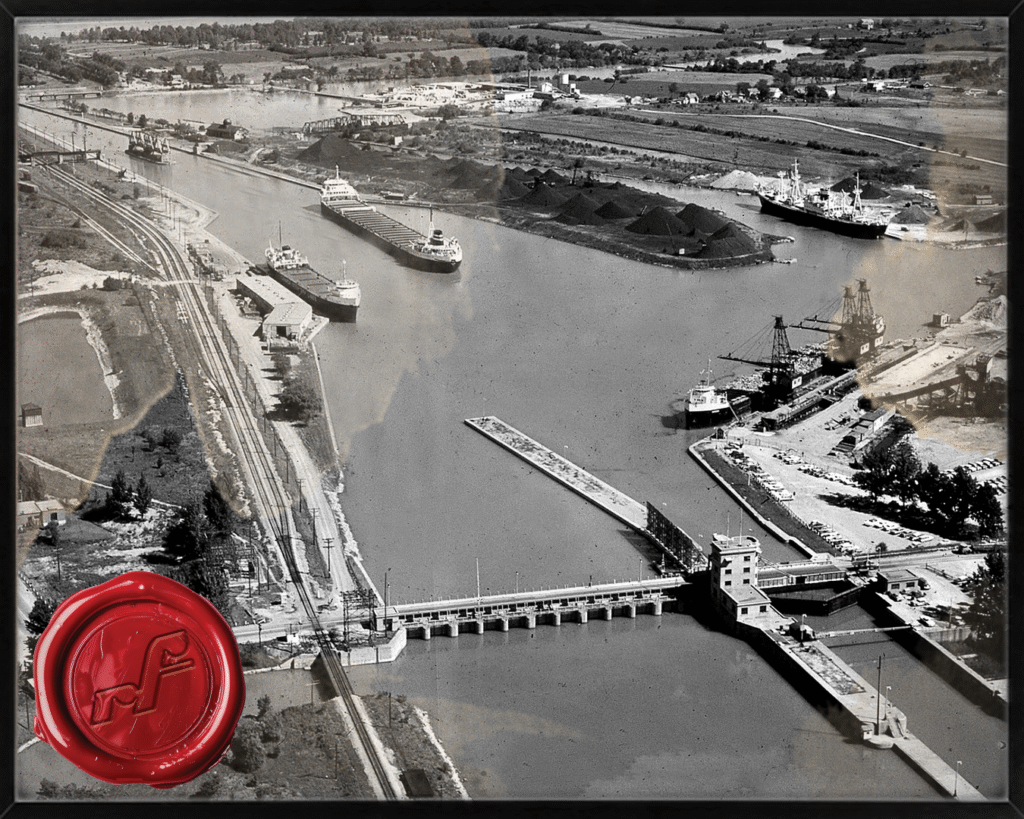
The Livingston Channel
On October 19, 1912, the freighter William Livingstone inaugurated the newly constructed Livingstone Channel. Named after Great Lakes navigation expert John A. Livingstone, this channel became a major route for vessels between Detroit, Michigan, and Windsor, Ontario. A part of the St. Lawrence Seaway system, this channel is a vital transportation artery for goods moving from the Great Lakes to the broader North American interior.
Russell A. Farrow, saw an opportunity and started his business ferrying goods between Windsor and Detroit, using the Livingstone Channel, in addition to facilitating customs brokerage.
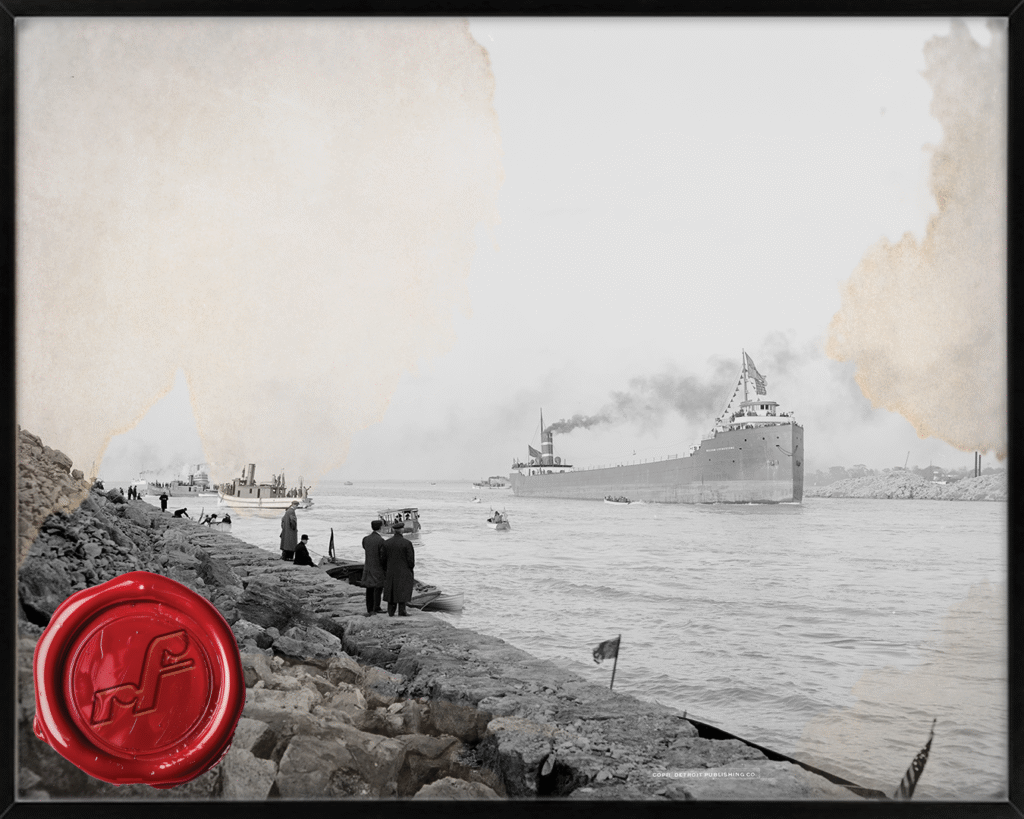
Rail Ferries on The Detroit River
Serving as a significant transportation link in the late 19th century between Detroit, Michigan, and Windsor, Ontario, rail-car ferries operated by the Michigan Central Railroad and the Grand Trunk Railway moved freight across the Detroit River before permanent rail crossings existed. These ferries played a critical role in trade and economic development, facilitating the exchange of goods between the United States and Canada.
In 1911, Russell Farrow founded the Farrow organization with a focus on customs brokerage and import/export facilitation, streamlining the movement of goods through these established cross-border ferry corridors, further strengthening trade connectivity between Canada and the United States.
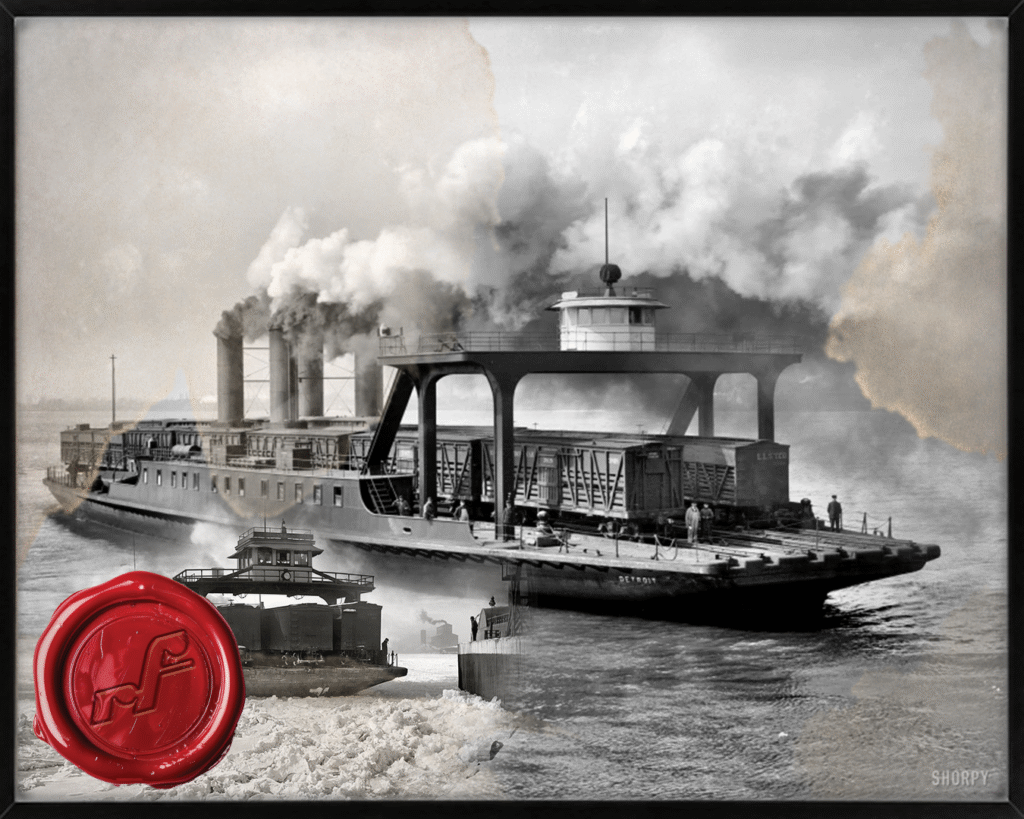
The Michigan Central Railway Tunnel
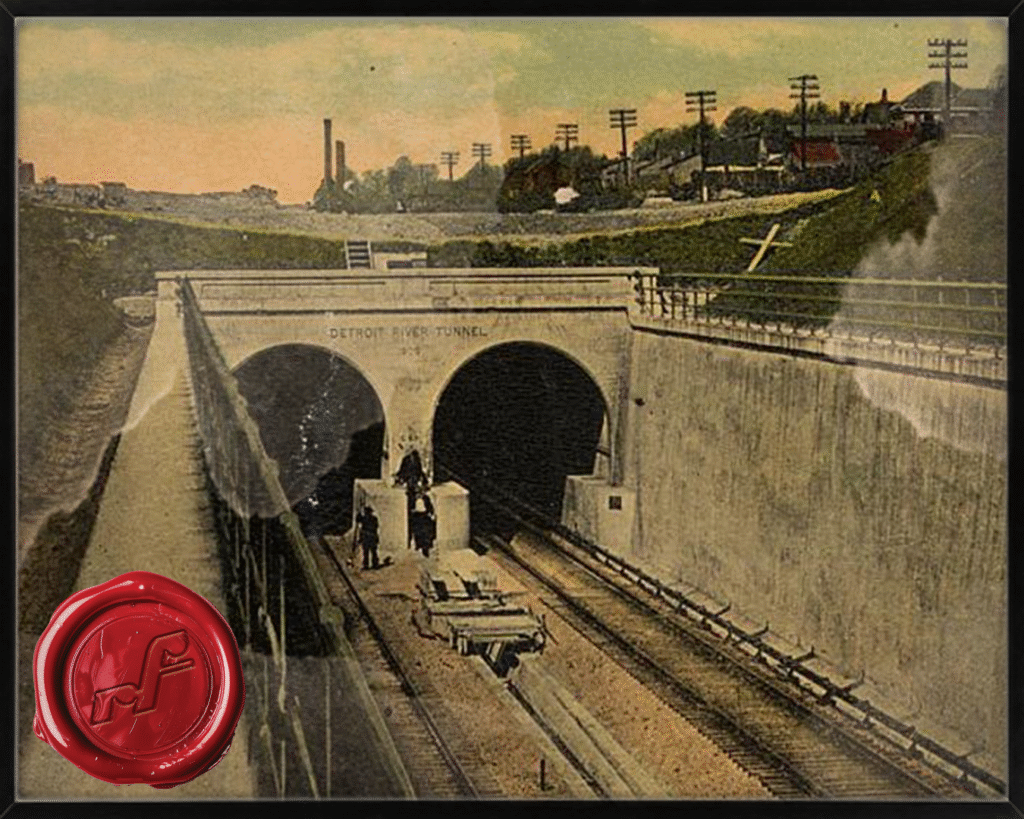
Opening on July 26, 1910, the Michigan Central Railway Tunnel played a crucial role in facilitating trade and transportation between Detroit, Michigan, and Windsor, Ontario, with the tunnel providing a direct and efficient transportation connection between the two cities.
Russell A. Farrow started his customs brokerage business in 1911, just one year after the completion of the Michigan Central Railway Tunnel. By leveraging the tunnel, and the accompanying river ferries, the Farrow organization was able to help clients transport goods to facilitate trade more effectively, establishing a strong foundation for the company’s success during that time period.
Today, the Michigan Central Railway Tunnel sees about 400,000 railcars pass through it on an annual basis.
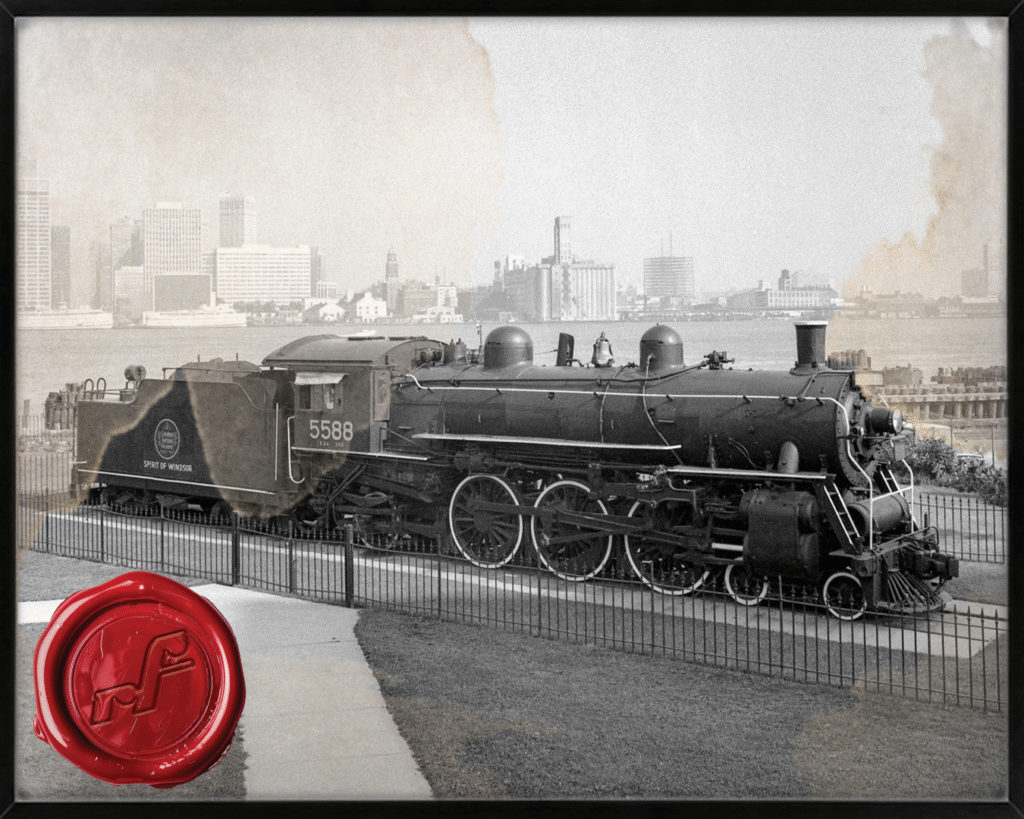
Spirit of Windsor Engine No. 5588
Built by Montreal Locomotive Works for the Canadian National Railways company, the No. 5588 locomotive played a vital role in Canada’s rail network, transporting freight and passengers across Southern Ontario.
The locomotive regularly delivered cargo to the Windsor, Ontario riverfront, where goods would be transferred for cross-border trade into Detroit. That same year that this locomotive was built –1911 – Russell A. Farrow customs brokerage was founded, growing alongside Canada’s evolving transportation networks through its support of trade activity in North America.
Retired in 1961, No. 5588 was saved by the community and in 1965 dedicated as the “Spirit of Windsor”, symbolizing the city’s rich heritage in rail transport and commerce.
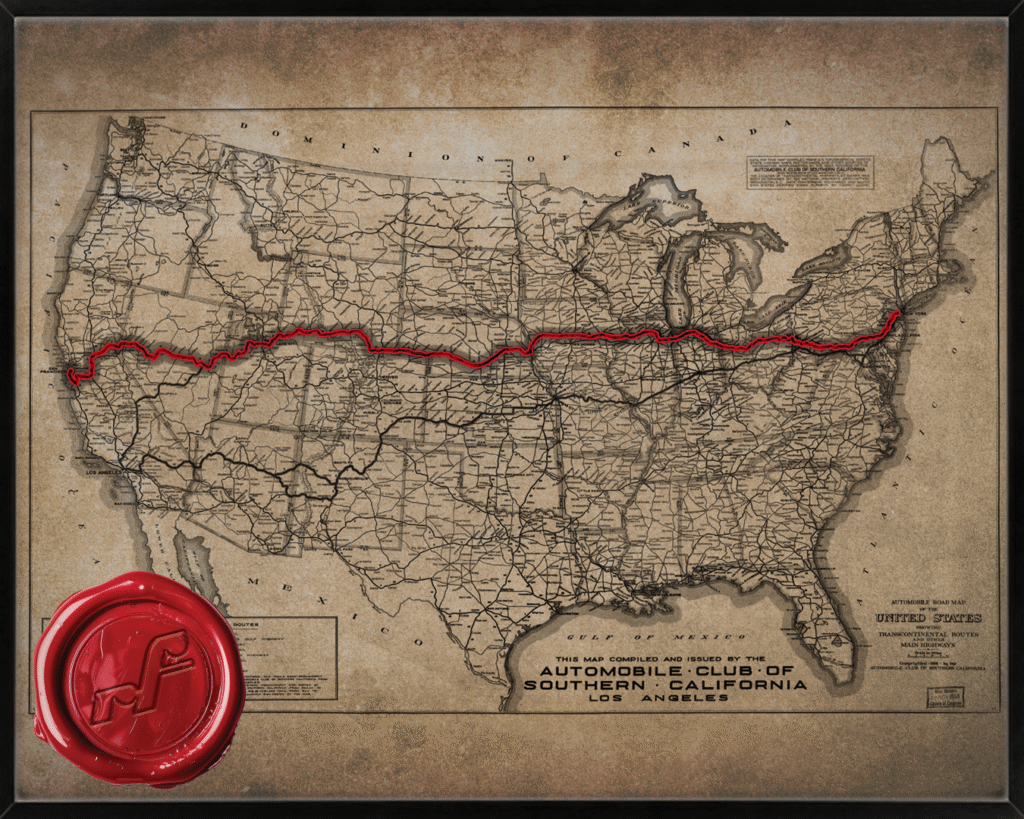
The Historic Lincoln Highway
Established in 1913, The Lincoln Highway connected New York City to San Francisco, tracing through historic landmarks linked to Abraham Lincoln and 19th-century trade, including pivotal trade cities like Chicago, Illinois, Omaha, Nebraska, and Cheyenne, Wyoming.
An early transcontinental route in the United States, this highway played a crucial role in the early days of trade and commerce. Today, while no longer a single continuous commercial artery, the Lincoln Highway endures as the blueprint for modern Interstate 80 (I-80), serving as a major trade corridor connecting the East and West coasts of the United States.
Russell Farrow, always on the lookout for new opportunities, was one of the first customs brokers in Canada to own delivery vehicles. This solution provided clients with an integrated logistics service, offering both customs brokerage and transportation from one organization.
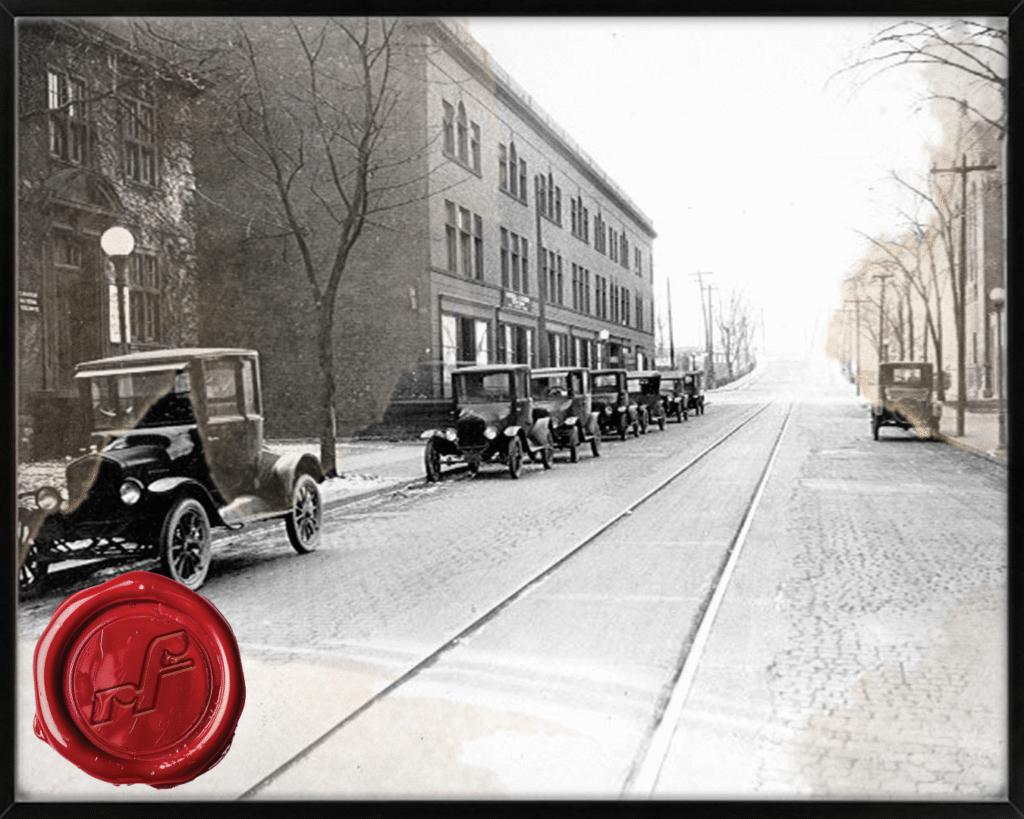
Russell A. Farrow: The First Brick and Mortar Office
Taken in 1923, this historic photograph was looking West on Sandwich Street East (today Riverside Drive East), just east of the Peabody Bridge, over the Canadian National Railway tracks.
Twelve years after Russell A. Farrow got his start in the customs brokerage business within the Windsor/Walkerville, Ontario, and Detroit, Michigan, areas, it is believed that this was the first photographic image of a Farrow office captured on film.
The businesses in this area drove extensive commercial and trade activity at that time. On the left side of the street were the following businesses: Russell A. Farrow Customs Brokerage; Pratt & Whitney Company of Canada; John Bertram & Sons Company Limited; and Canadian National Railway Freight Depot. On the right of this photograph, are the Hiram Walker Distillery buildings, consisting of the Feed Mill and the Malt House, and the office of Hiram Walker. Today, all of these buildings have been demolished, and the area is mostly open space.
The Women Who Steered Farrow Forward
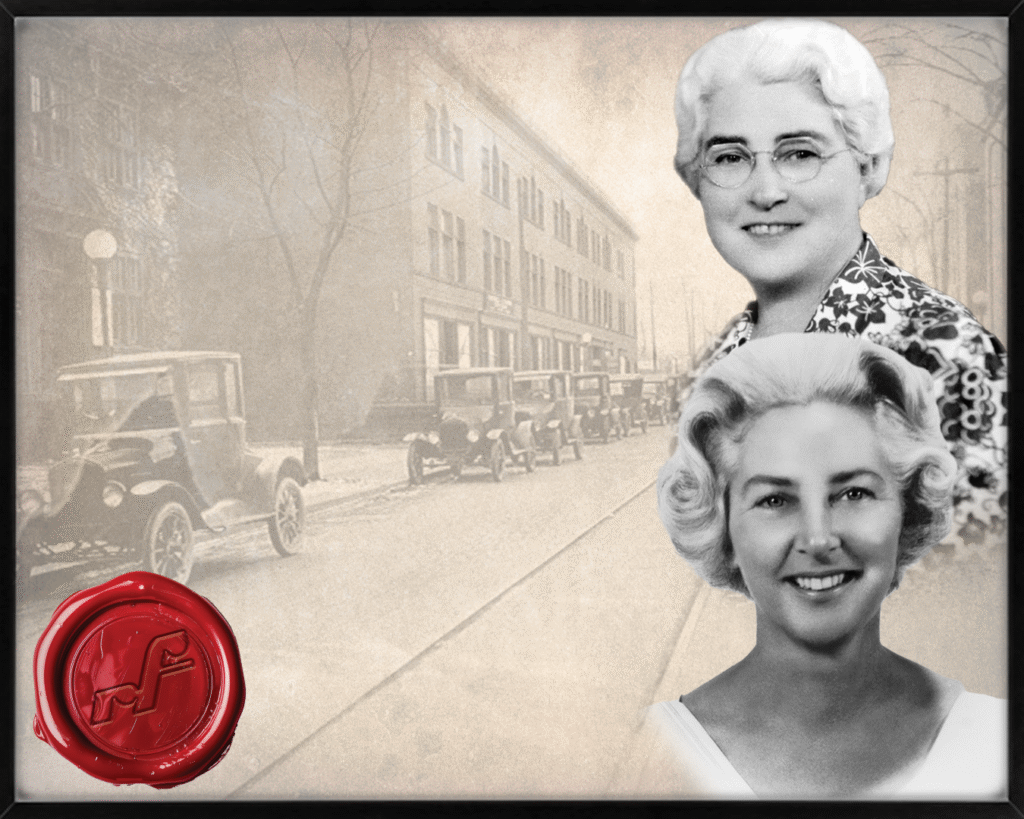
In 1949, after the sudden passing of Russell A. Farrow, leadership of the family business passed to his wife, Alice M. Farrow. At a time when few women led in business, Alice stepped in with resolve, incorporating the business as “Russell A. Farrow Limited”, and guiding the organization through seven pivotal years of transition. Her steady leadership kept operations reliable as post-war supply chains expanded and new infrastructure reshaped North American trade.
By the time Alice handed the reins to the next generation – Jane Scorgie (née Farrow), Bob R. Farrow, and Huntley J. Farrow, the company was poised for modernization. Jane, joined the company in 1970, and spent a decade in Finance and Human Resources professionalizing internal systems as Farrow grew, supporting expansion and preparing the business for the technological advances of the late 1970s.
Together, Alice and Jane exemplify the vital role of women in Farrow’s history. They ensured the company thrived from post-war rebuilding into the dawn of the digital age. Their combined influence preserved the family’s trade legacy and built a resilient foundation for innovation, bridging the era of ferry crossings and paper ledgers to computerized systems and cross-border efficiency.
Modernization and The Dawn of Computing at Farrow
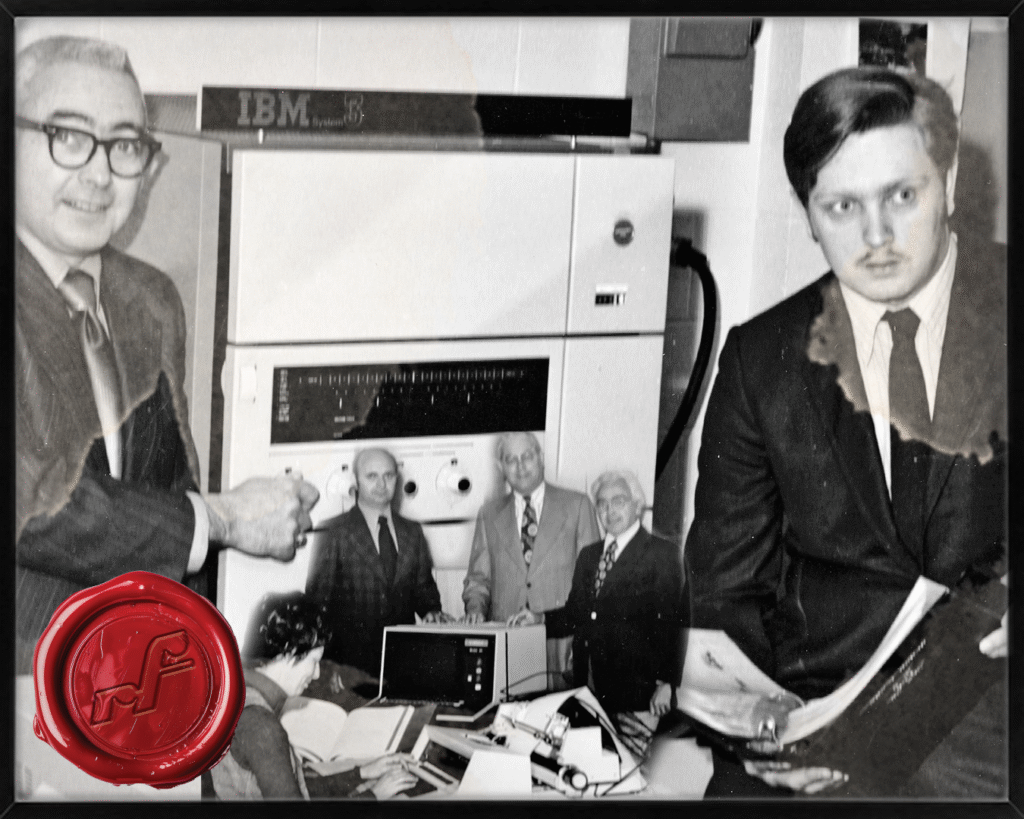
By the 1970s, international trade was accelerating, and customs brokerage faced a new frontier: the digital age. Bob R. Farrow and Huntley J. Farrow emerged as forward-thinking leaders, determined to position the family business at the forefront of change.
Recognizing that speed, accuracy, and data management would define modern logistics, they pioneered Farrow’s first computing initiatives.
In 1978, the company installed its inaugural computer system, an ambitious move when most brokers still relied on paper ledgers. This early system streamlined customs documentation, improved tariff classification, and sped up duty calculations – all giving Farrow a decisive competitive edge.
Digitizing records also enabled real-time shipment tracking, faster responses to client needs, and adaptability to evolving regulatory requirements.
Just as Russell A. Farrow had leveraged ferries, rail tunnels, and bridges to transform early cross-border trade, Bob and Huntley harnessed computing power to modernize brokerage.
Their vision cemented Farrow as both a trusted broker and technological innovator, laying the groundwork for the advanced, integrated systems that define its operations today.
The Ambassador bridge
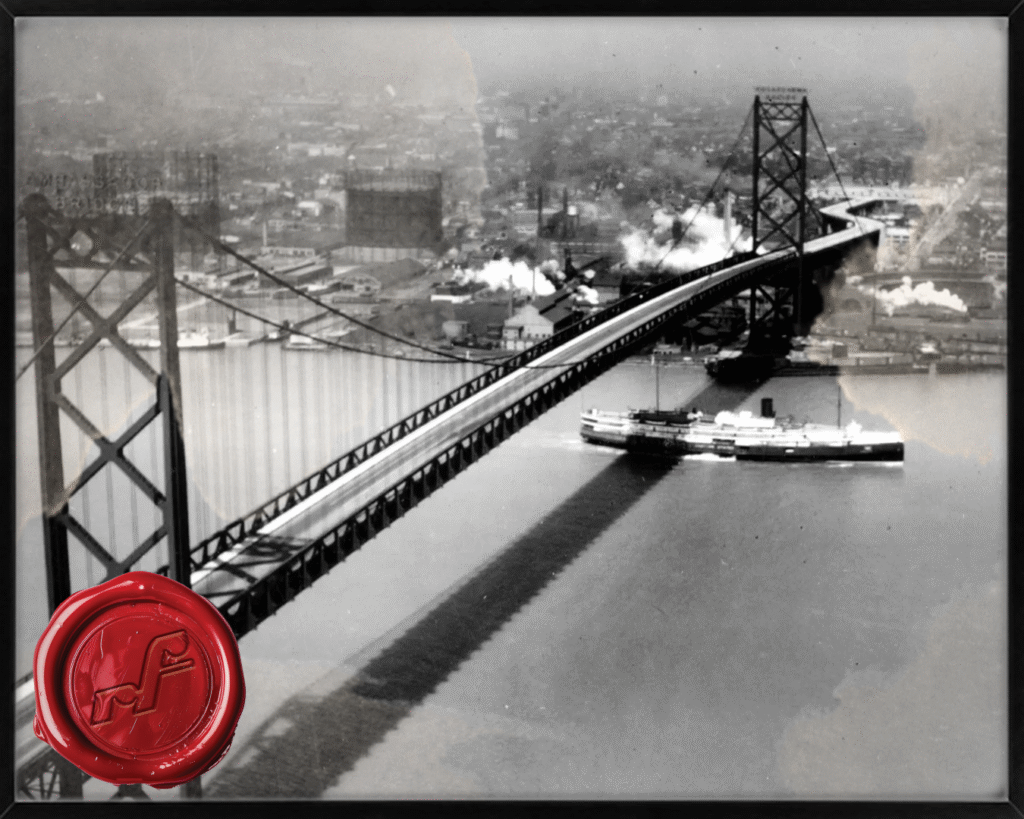
Established in 1927, the Ambassador Bridge is a crucial trade link between the United States and Canada. Handling over 25% of all merchandise – including consumer goods and automotive parts – this bridge supports the regional economy, influences 150,000 jobs, and provides a significant annual production value. The bridge facilitates trade between major regional industrial centers, such as the automotive industry, and enhances efficiency by reducing travel time (and cost) between the two countries. Despite debates over proposed developments, this bridge remains a significant piece of infrastructure for trade, physically symbolizing the key United States-Canada economic tie.
With its head office situated a couple of minutes down the road from the Ambassador Bridge, for nearly a century the Farrow organization has supported numerous clients who leverage the bridge’s efficiency to transport goods, strengthen Farrow’s position as a leading North American customs brokerage.
The Gordie Howe Bridge: History in The Making
Updates to infrastructure and supply chain routes become necessary over time due to evolving trade, urban growth, population changes, and economic demands.
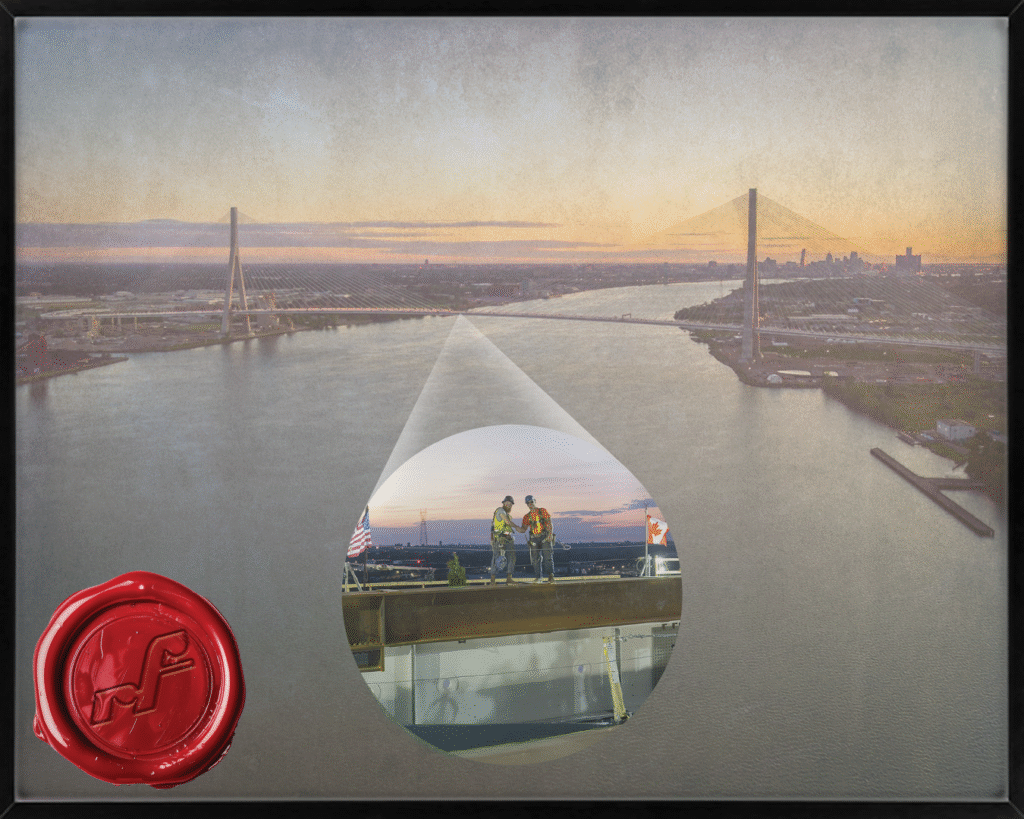
For almost a century, both Canada and the United States have relied on the Ambassador Bridge, a historical landmark between Windsor, Ontario and Detroit, Michigan, for movement of goods and people. To further support this region, a new bridge was designed to contend with an increasing flow of goods – the Gordie Howe International Bridge. The final segment of the newly constructed bridge was installed on June 14, 2024 marking the third international crossing between the two cities. Once it is in use, both nations will recognize the Gordie Howe International Bridge as the primary trade route for the area, marking a historical trade transition. This bridge project solidified the importance of trade between the two nations like never before. As a globally renowned thoroughfare, this new bridge will be a transformative addition for the region and both countries.
In close proximity to the Farrow head office in Windsor, this new bridge will continue to allow Farrow clients to efficiently trade on both sides of the border.
Fun Fact: Once operational, this new bridge will be the longest cable-stayed spanning bridge in North America!
Bridging The Future - Farrow with Kuehne+Nagel
In late November 2023, Farrow, a major North American customs brokerage and logistics company, announced its upcoming acquisition by Kuehne+Nagel Group, with Farrow maintaining its identity and leadership structure under Rick Farrow’s chairmanship.
“We have been looking for just the right fit for the next step in our company’s journey, and only one company made sense – Kuehne+Nagel – as they are committed to upholding Farrow’s legacy and doing right by its valued colleagues and clients,” said Rick Farrow, Chairman, Farrow. “We are excited to take our successful, long-time family-owned business to the next level and welcome the opportunity to be part of one of the world’s leading logistics companies.”
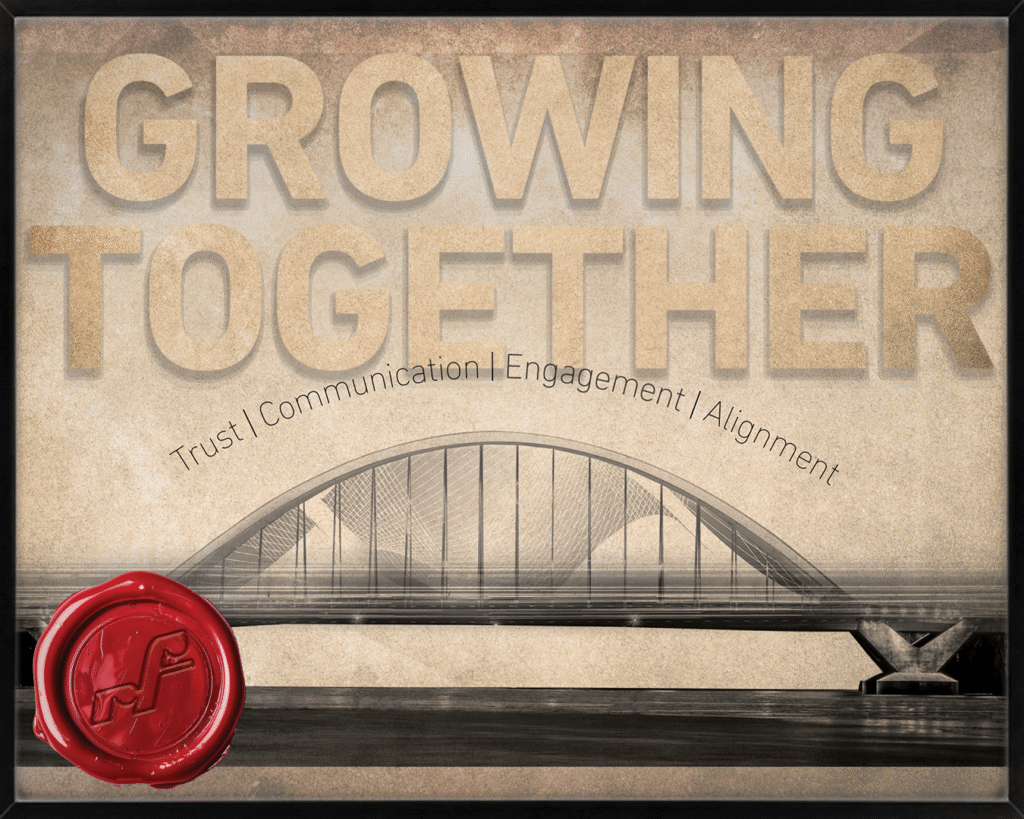
Together, with Kuehne+Nagel, we will continue to bridge borders, build trade, and deliver world-class supply chain solutions for generations to come.
A Visionary Leader's Journey of Impact and Purpose
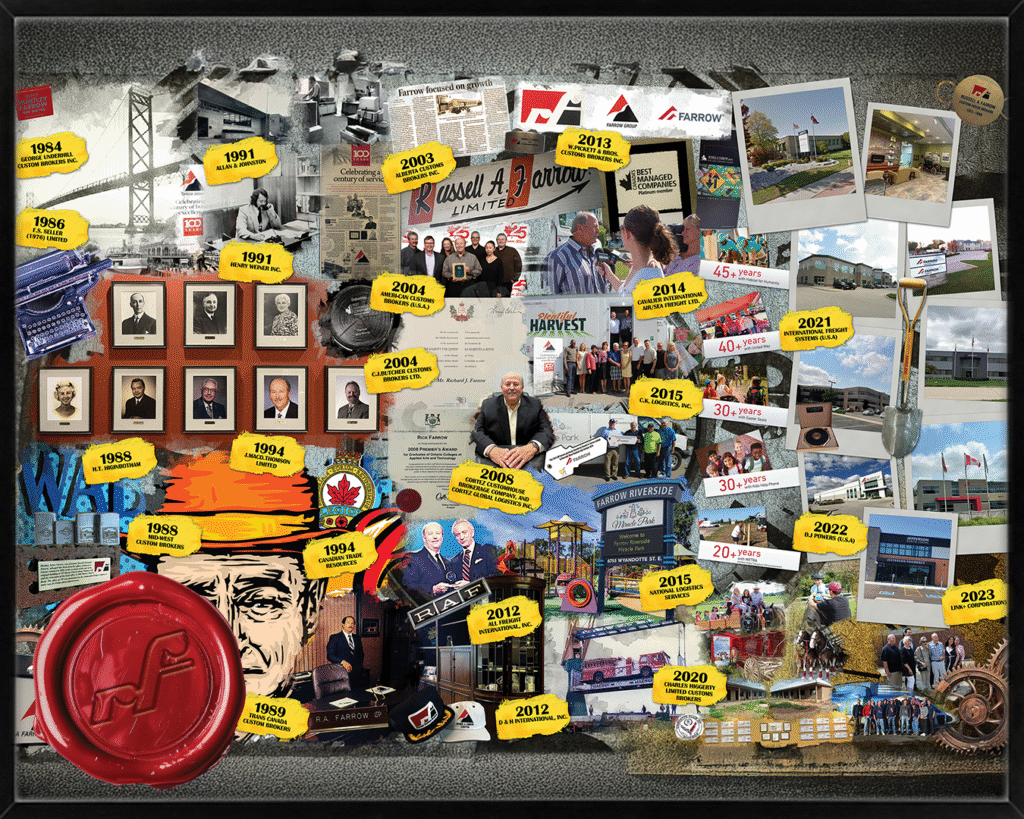
Rick Farrow is a visionary whose leadership has touched countless lives and whose wisdom illuminated paths forward.
In 2024, his tenured career was marked by a carefully curated collection of moments encapsulated in a collage that spoke to a legacy built on compassion, foresight, and an unwavering commitment to excellence. From cherished family traditions to groundbreaking achievements, each milestone told a story of perseverance and purpose. While no single collage could fully capture the depth of his leadership or the breadth of his achievements, this recognition offered a heartfelt glimpse into a life dedicated to positive change. Each accomplishment shown represents a chapter in a story of tireless dedication, generous spirit, and transformative leadership.
Throughout his career, Rick exemplified a philanthropic spirit that always gravitated toward nurturing both people and possibilities. His strategic vision outside of business allowed Rick the unique ability to identify opportunities where others saw none. Charitable acts and donations run organically through the Farrow family and, as an extension, the Farrow organization – transforming and uplifting communities where Farrow employees work and live.
Rick’s journey is a remarkable one of transformative leadership, honoring an extraordinary legacy of achievements, dedication, and profound impact that shaped both industries and lives.
In Rick Farrow, we see the embodiment of what is meant to lead with purpose – his legacy evident in every acquisition made, every team member mentored, every community strengthened, and every life touched along the way.